OSHA Porta Potty Requirements for Texas Job Sites
By the Jeffrey Rental Works operations team · Published and reviewed October 5, 2026
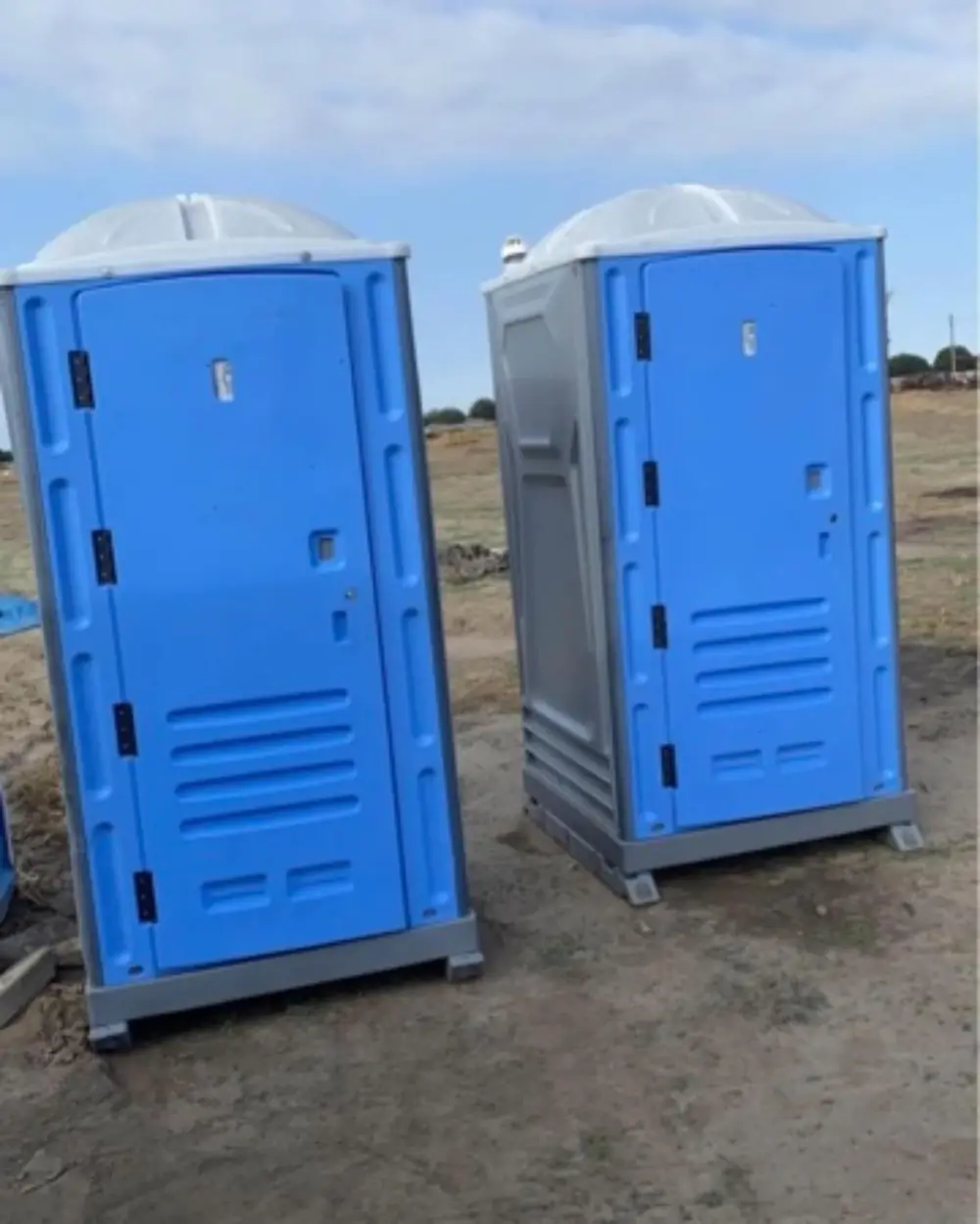
Which OSHA rule covers porta potties on Texas job sites?
Texas has no state OSHA plan for private employers, so federal OSHA rules apply. Construction sites follow 29 CFR 1926.51(c), general industry follows 29 CFR 1910.141, and farm field work follows 29 CFR 1928.110. Each rule sets a minimum number of toilets based on how many workers are on site.
Construction: 29 CFR 1926.51 Table D-1
Construction sites with 20 or fewer workers need 1 toilet. Sites with 20 to 199 workers need 1 toilet seat and 1 urinal per 40 workers. Sites with 200 or more need 1 seat and 1 urinal per 50 workers. Chemical toilets are allowed where there is no sanitary sewer nearby.
| Workers on site | OSHA minimum (29 CFR 1926.51 Table D-1) | Example |
|---|---|---|
| 20 or fewer | 1 toilet | A 6-person roofing crew needs 1 unit |
| 20 to 199 | 1 toilet seat and 1 urinal per 40 workers | 85 workers ÷ 40 = 2.1, round up to 3 units |
| 200 or more | 1 toilet seat and 1 urinal per 50 workers | 260 workers ÷ 50 = 5.2, round up to 6 units |
Official text: 29 CFR 1926.51. Mobile crews with transportation readily available to nearby toilets are exempt from the on-site rule.
Do construction sites need hand washing?
Construction sites need washing facilities under 1926.51(f) for workers who apply paints, coatings, herbicides or insecticides, or work with other harmful contaminants. The facilities must have hot and cold or tepid running water, soap and towels. Where showers are required, the rule calls for 1 shower per 10 workers of each sex.
General industry: 29 CFR 1910.141 Table J-1
Plants, warehouses and other general-industry sites need 1 toilet for 1–15 workers, 2 for 16–35, 3 for 36–55, 4 for 56–80, 5 for 81–110 and 6 for 111–150, plus 1 more for each 40 workers above 150. Lavatories must be available in all places of employment.
| Workers | Minimum toilets |
|---|---|
| 1–15 | 1 |
| 16–35 | 2 |
| 36–55 | 3 |
| 56–80 | 4 |
| 81–110 | 5 |
| 111–150 | 6 |
| Over 150 | +1 per 40 |
Official text: 29 CFR 1910.141.
Farms: 29 CFR 1928.110
Farms with 11 or more workers doing hand labor in the field on any day need 1 toilet and 1 hand wash station for every 20 workers, within a quarter-mile walk of each worker. The rule does not apply to work lasting 3 hours or less, including travel time.
Official text: 29 CFR 1928.110.
Worked example: a 65-worker framing site
A 65-worker framing site needs at least 2 porta potties under OSHA: 65 ÷ 40 = 1.6, rounded up to 2 seat-and-urinal sets. For a 50-hour week, we would recommend 6 to 7 units, about 1 per 10 workers, so the 60-gallon tanks do not fill before the weekly service.
The gap between the legal minimum and a comfortable count is large. OSHA sets the floor; tank size and hours set the real need.
Quick answers
Does OSHA require separate toilets for men and women?
Not on construction sites with chemical toilets that lock from inside. Each unit is single-occupancy.
Is a urinal required?
Above 20 workers, Table D-1 counts toilet seats and urinals. Our standard units include both.
Do subcontractors count toward the worker total?
Count everyone on site who uses the facilities, including subcontractors.
Who must provide the toilets?
The employer. On multi-employer sites, the general contractor usually arranges them.