ADA vs. Wheelchair-Accessible Porta Potty: What's the Difference?
By the Jeffrey Rental Works operations team · Published and reviewed October 5, 2026
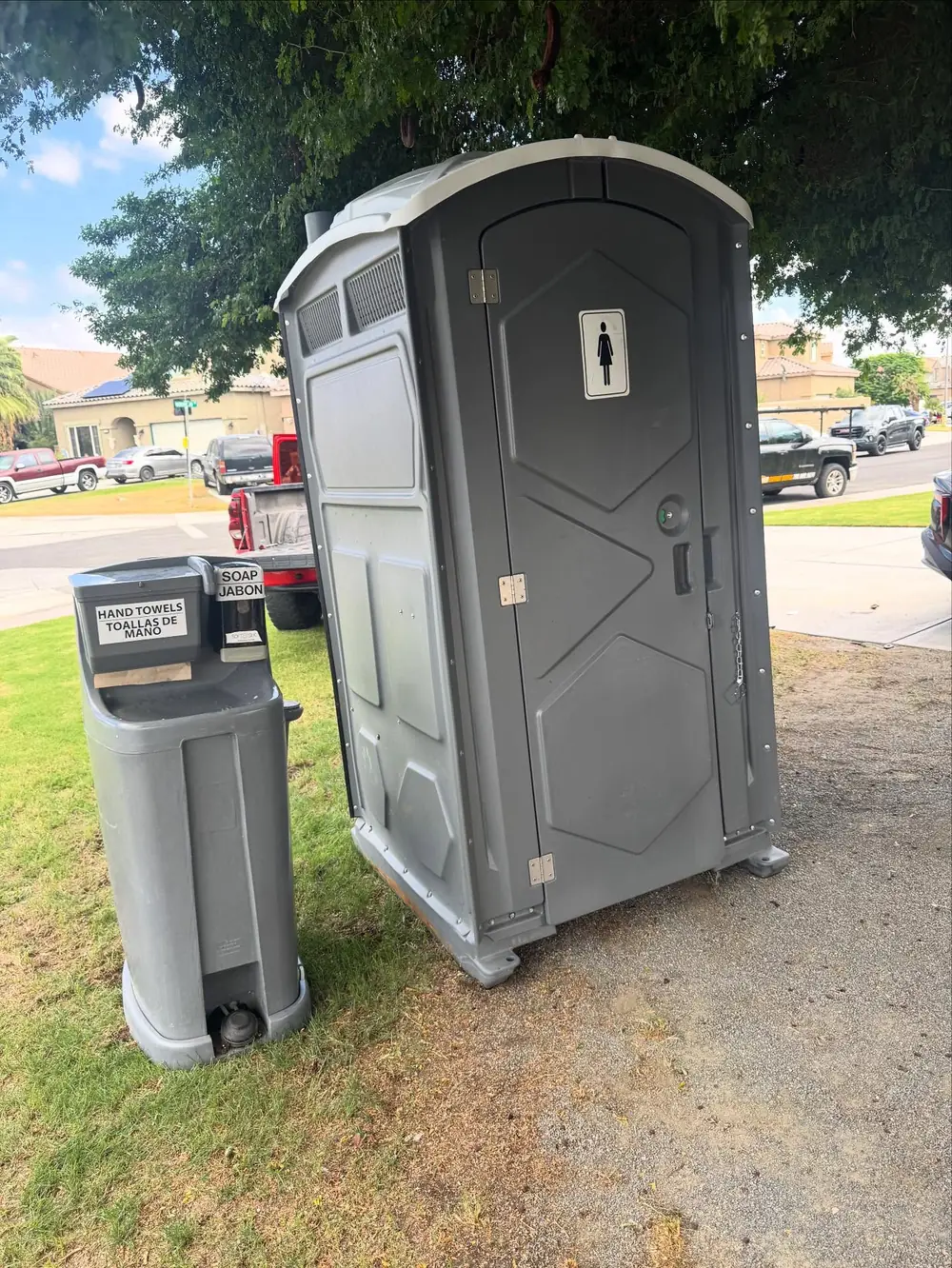
Is a wheelchair-accessible porta potty ADA-compliant?
A wheelchair-accessible porta potty is a product designed for wheelchair users, but ADA compliance depends on the whole setup, including the route, the ground and the number of units. Our reference model's maker, PolyJohn, calls the Comfort XL handicap-accessible and does not label it ADA-compliant. We use the same careful wording.
PolyJohn's own blog says: "Handicap portable restrooms are not the same as ADA-compliant portable restrooms. To be considered ADA-compliant, the unit must meet certain additional requirements" (PolyJohn).
How many accessible units does an event need?
An event needs at least 5% of the portable units in each cluster to be accessible under 2010 ADA Standards section 213.2, which works out to at least 1 per cluster. A cluster of 1 to 20 units needs 1 accessible unit. A cluster of 21 to 40 needs 2. Each accessible unit needs an accessible route.
The U.S. Access Board states: "Where portable single user toilet units are provided, including at temporary events, access is required to at least 5% in each cluster" (Access Board guide).
What is the 60-inch turning space?
The 60-inch turning space is a circle 60 inches in diameter, or a T-shaped space, that lets a wheelchair turn around, defined in ADA Standards section 304. It is a diameter, not a radius. The reference model has more than 16 square feet of floor and a 32-inch door; the maker describes room for a three-point turn.
Tech specs: PolyJohn Comfort XL
- Height91 in
- Width62 in
- Depth62 in
- Weight (empty)240 lb
- Door opening32 in wide × 74 in tall
- Floor spaceMore than 16 sq ft
- Waste tank33 gal
- EntryGround-level roll-in floor, barrier-free sill, interior handrails
Source: PolyJohn Comfort XL manufacturer spec page. Specs are the manufacturer's published figures for the reference model named. Your unit may be an equal model from our fleet; ask and we will confirm the exact model and size before delivery.
Where should an accessible unit be placed?
Place an accessible porta potty on firm, level ground such as pavement or packed gravel, on a route at least 36 inches wide that connects to parking and the main event area, with about 5 feet clear in front of the door. Avoid slopes, curbs and soft grass. Mark it with the International Symbol of Accessibility.
Which local cities name accessible units?
Several cities near Irving name accessible restrooms in their event rules. Southlake requires event organizers to provide portable restrooms including mobility-impaired accessible units. North Richland Hills code requires handicap-accessible facilities for all event attendees. Irving's code sets toilet counts, and federal ADA rules set the accessible share.
See Southlake and North Richland Hills for the exact wording.
General information, not legal advice. Confirm with your venue, permit office or ADA coordinator.
Quick answers
Can I call my rental unit ADA-compliant on a flyer?
Avoid it. Say 'wheelchair-accessible restroom available' unless your whole setup has been reviewed.
Do private parties need an accessible unit?
The ADA covers public accommodations. Private home parties are generally not covered, but if a guest uses a wheelchair, rent one.
Is an accessible unit bigger?
Yes. The reference model is 62 inches square versus about 44 inches wide for a standard unit.
Do accessible units cost more?
Yes, somewhat. See our cost guide.